Process / inspection to handover
Bay hours for one vehicle, not calendar days
Gauge readings across every panel, gloss check and a written defect map. Nothing is polished before this sheet is signed, and the inspection fee is credited toward a package booked within 14 days.
Two-bucket wash, iron and tar removal, then a clay pass. Bonded grit is what causes swirl marks once a machine pad starts moving, so this stage is never shortened.
Cutting and refining passes are matched to the measured clearcoat thickness. Correction depth is agreed with you under controlled lamps instead of being decided in the bay.
Pre-cut patterns with wrapped edges on impact zones, applied in slip and tack stages. The car stays in the bay for 24 hours so edges settle before it sees road speed.
Panel wipe, primer, then layered coats. The coating is a risk-reducing layer, not a permanent shield: no washing and no rain exposure during the 7 day cure.
Walkaround with the lamps on, film edge check, written care card and the first maintenance date booked. Limits are written down here too, including what stone chips and winter salt will still do.
Scope and inclusions sit on the package comparison table. Defect records from step 01 are logged in the inspection evidence section, and the maintenance dates continue on the care timeline.
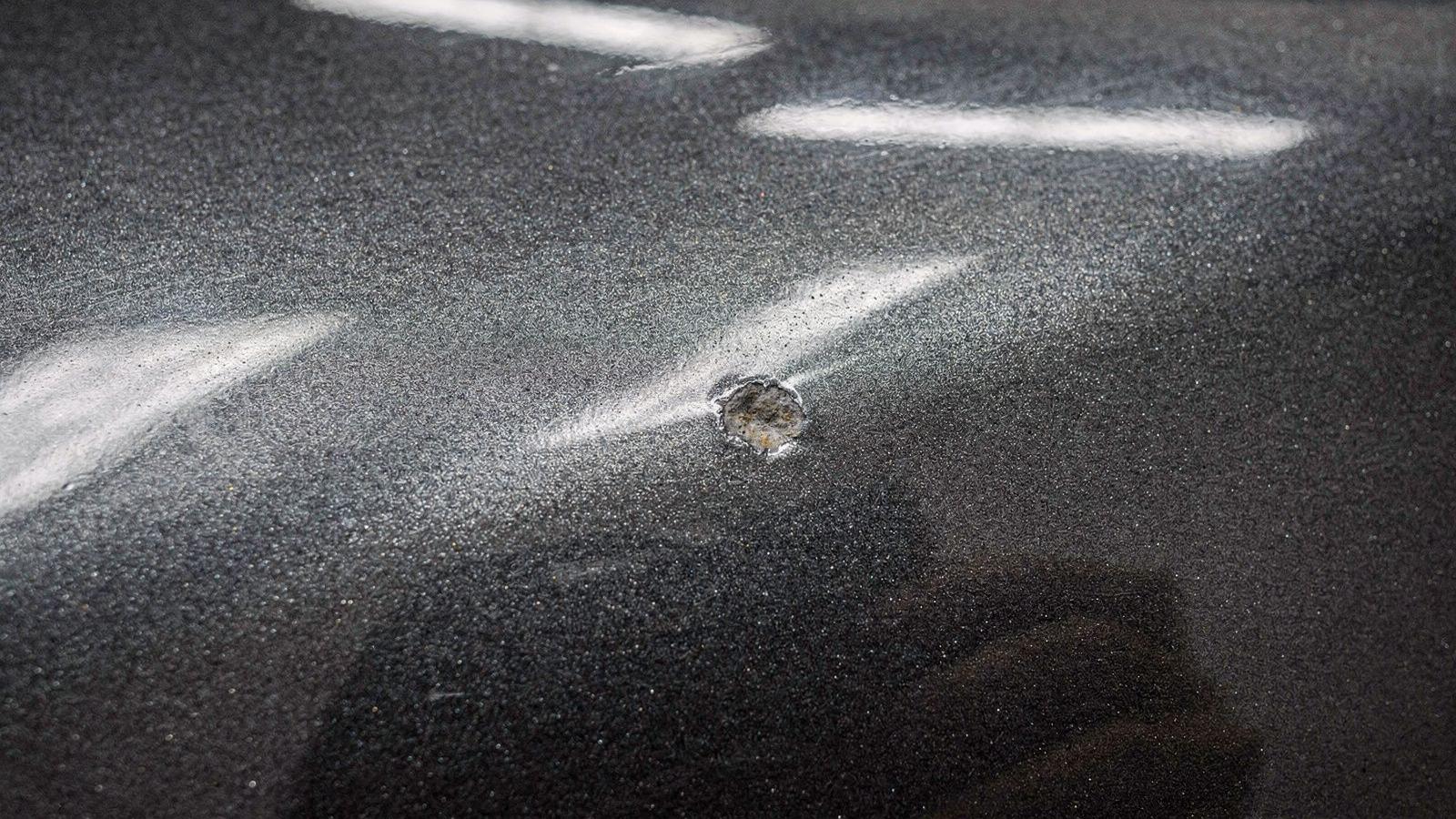
Process 03 · Inspection evidence
Bay 2 · Kyiv · depth in µm
132 µm
Limited edge P-02
Every reading is written into the job file and handed over with the keys. Next: the care timeline or package comparison.
Care timeline
P-02 / P-03 upkeep
Film and ceramic lower the risk of chips and etching. They do not remove maintenance. These are the visits we schedule after handover so the surface still reads like the day it was measured.
Between visits, pH-neutral shampoo and a two-bucket wash keep the readings honest. A skipped season shows up as dull numbers before it shows up as damage.
Read the limits we put in writing05 / Limits & warranty
Written terms are issued with every handover record. Ask us to read them with you before the vehicle leaves the bay.
It covers our labour: adhesion failures, lifted edges, bubbles and haze caused by application. It does not cover damage caused by stones, kerbs, car washes, bird droppings left standing or abrasive wiping. Film and coating material warranties come from the manufacturer and are registered in your name.
No. Both are risk-reducing layers. Film absorbs most stone strikes and light scuffs, and coating slows contamination and wash wear. A hard impact, a deep scratch or a poor wash routine will still reach the clearcoat. We describe the protection level per package instead of promising a permanent result.
Paint depth readings, gloss values and the defect map decide how much correction a panel needs. Two cars of the same model can differ by several hours of polishing. Published package ranges are starting points in UAH; the inspection fee is credited toward a package booked within 14 days.
P-01 Polish is typically one to two working days. P-02 PPF depends on coverage: a front-end set is two to three days, a full body up to five. P-03 Ceramic adds a cure night indoors, and P-04 Custom is scheduled after the inspection. We confirm dates in writing before work starts.
A annual inspection at the studio, pH-neutral hand washing, and prompt removal of bird droppings, fuel spills and tree sap. Coating top-up is recommended at 12 months. Skipping recorded inspections does not void the film warranty, but it does limit claims on coating performance.
Yes, in defined cases: repaint or polishing by another workshop, automatic brush washes, abrasive compounds, solvent contact, or accident repair over a filmed panel. Each refusal is documented with photographs and a written explanation, and you keep a copy for your records.